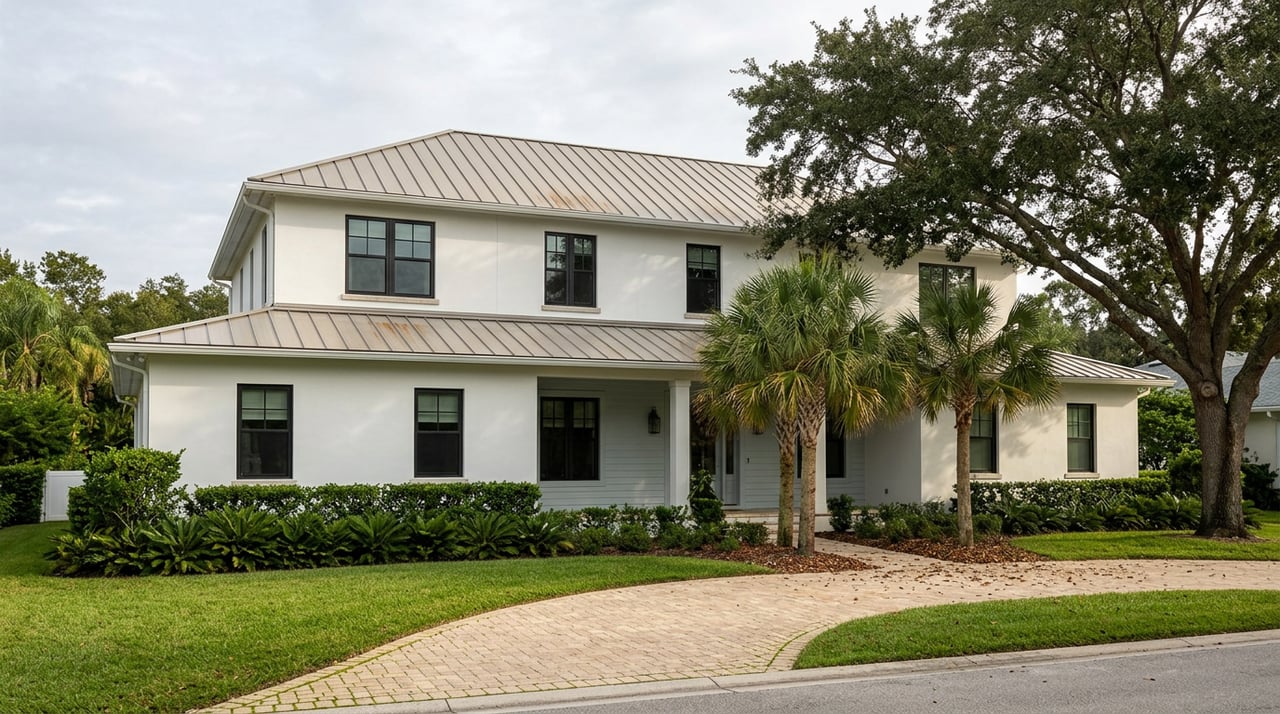
The Rent Everyone Quotes in Gainesville Isn't the Rent You'll Actually Collect
September 3, 2026
September 3, 2026
"Gainesville as a whole is a market that always goes up."
A local leasing consultant said that to a student reporter at The Independent Florida Alligator earlier this year, and on paper she's right. Citywide average rent climbed from $1,792 a year ago to $1,824 as of July 2026, a gain of just under 2 percent. Ask five different sources for "average rent in Gainesville" and you'll get five different numbers depending on whether they're counting studios downtown, three-bedroom houses out near Haile Plantation, or a single bedroom in a four-bedroom unit two blocks from Ben Hill Griffin Stadium. That range is the first thing anyone buying a rental property near the University of Florida needs to sit with before running a single spreadsheet.
Here's the part the average doesn't show. That same Alligator reporting, published in February, found that leasing interest for the school year that has now started this August was actually slowing months out, even as asking rents kept climbing toward move-in. That isn't a contradiction once you understand how those numbers get set in the first place. It's a warning about what a headline rent figure will and won't tell you about one specific address.
Ask around Gainesville's off-campus leasing offices and you'll hear about something the industry calls a tier system. A building opens its books for the next school year, prices the first leases low to get commitments moving, then raises the rate once a set number of units are signed. The leasing consultant quoted above described it plainly to the Alligator: a lot of apartments work off a system where hitting a certain number of signed leases at a certain price point triggers the next price tier. The more leases get signed, the higher the next batch prices.
That mechanism produces a number that looks like organic demand from the outside, rent rising because the market wants it to, but it's really a pricing ladder that climbs on schedule regardless of how strong true demand is in a given year. One property's increase becomes the next property's excuse to match it. The average rent that shows up in a spreadsheet six months later reflects wherever that ladder landed, not necessarily what a slower-moving property with less brand recognition could actually charge.
Earlier this year gave a real example of the gap, one that's already playing out now that the school year has begun. A UF finance student was paying about $1,350 a month for a room in a four-bedroom apartment. His landlord wanted to raise the rate to $1,550 for the year that just started this August. He and his roommates chose not to re-sign. Instead they moved to Stadium House, a newer building offering similar rent with better amenities. Another student who'd been living in the dorms moved to The Standard for more space and a kitchen. Sweetwater Gainesville Apartments, an older-style complex along West University Avenue, was the property photographed for the story about rising rents, not because it was the priciest option in town, but because it illustrated what happens when a property raises its price without adding anything new to justify it.
The same reporting noted that student interest in signing new leases had cooled compared to the year before, and tied that directly to how far rent had already climbed. Florida Realtors was projecting roughly a 1 percent decline in rents nationally for 2026. Whether Gainesville ends up following that national trend matters less than the fact that its rent growth and its demand were already moving in opposite directions before any national softening showed up.
That divergence is the detail an out-of-town buyer is most likely to miss. A market where prices climb because of a ratcheting pricing structure, rather than because more renters are competing for the same units, can look strong in a spreadsheet and still leave a specific unit sitting empty at renewal time if the new asking price outruns what students are actually willing to pay.
Investors evaluating Gainesville rentals typically work from a few widely cited ranges. Cap rates run roughly 3 to 6 percent depending on property type and condition. Price-to-rent ratios sit around 13 to 17. Purchase prices for rental-grade properties near campus commonly fall somewhere between $260,000 and $350,000.
Here's how those ranges play out on a property type common near UF, the four-bedroom house rented by the room instead of as a single unit:
That math only holds if every room actually rents at $950 and every tenant renews without a gap. The tier system that produces headline rent figures assumes the same thing at a larger scale, that the last price increase holds and the next group of tenants pays it without blinking. When leasing interest slows the way it did earlier this year, that's exactly the assumption that breaks first. A property that isn't new, isn't a short walk from the busiest stretch of campus, or doesn't match the amenities of a Stadium House or The Standard is the one most likely to have to roll its price back down to keep rooms filled, even while the city's published averages keep climbing on schedule.
Gainesville's rental market isn't one market. A three-bedroom house in a family neighborhood rents to a different tenant than a four-bedroom unit two blocks from Sorority Row, and the citywide average blends both into a single figure that doesn't describe either one particularly well. That blending is useful for tracking a metro area over time. It's not useful for pricing one specific house.
The properties commanding top-tier rent this cycle, the newer builds close to campus with amenities designed around a per-room rental model, are competing directly against older stock that can't add a pool or a study lounge without a renovation budget most small investors don't have. If you're looking at a listing's asking rent next to the citywide average and assuming you'll land close to it, you're pricing against buildings you're not actually competing with.
Before assuming a property will hit the top of Gainesville's rent range, it's worth checking three things: whether your comparable rents come from properties with amenities similar to the one you're buying, whether those comps were signed early in a leasing cycle or late once the tier system had already climbed, and whether the property's location competes with the newest supply or sits far enough from it that pricing pressure runs the other direction. None of that shows up in a single average rent number, and all of it changes what a realistic first-year return actually looks like.
If demand is slowing, why do average rents keep rising? Because published averages reflect where pricing ladders landed after leases signed, not a live read on how many renters are competing for a unit right now. A building can raise its price on schedule even in a year when fewer people sign early.
Is a lower price-to-rent ratio always the better deal? Not on its own. A ratio in the 13 to 17 range describes the relationship between purchase price and rent, not whether that rent is achievable for a specific unit against current competition. It's a starting filter, not a guarantee.
Does the citywide average rent apply to properties near campus? Only loosely. Citywide figures blend family neighborhoods, downtown studios, and near-campus student housing into one number. A property's real rent ceiling depends far more on its distance from campus and its amenities than on the city average.
If you're weighing a purchase near UF, or trying to figure out what a specific Gainesville property could realistically rent for once this leasing cycle plays out, Palm & Pine Collective can walk through the comps that actually apply to your address instead of the citywide blend. Reach out for a free home valuation and a straight answer about what a property in this market is worth to you.
Stay up to date on the latest real estate trends.
Grow your career within a collaborative, mentorship-driven environment focused on integrity, education, and sustainable success.