Why Two Septic Homes in Spring Hill Can Be on Completely Different Clocks
September 10, 2026
September 10, 2026
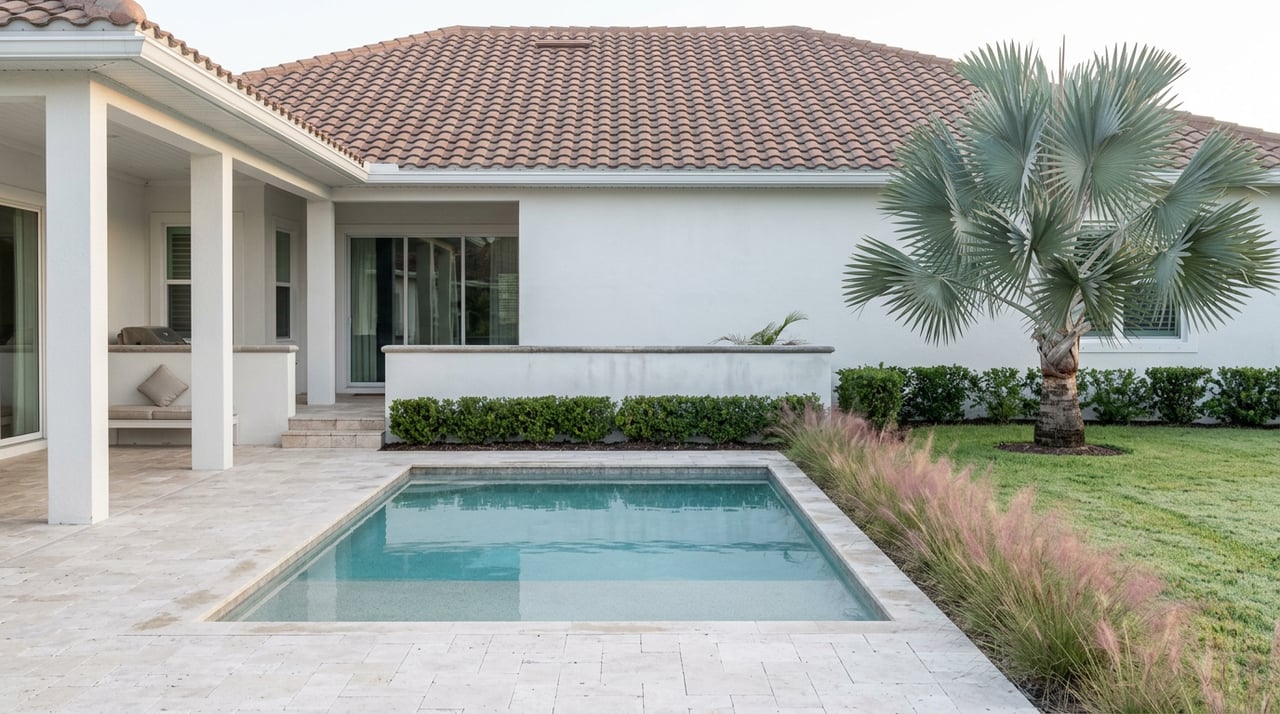
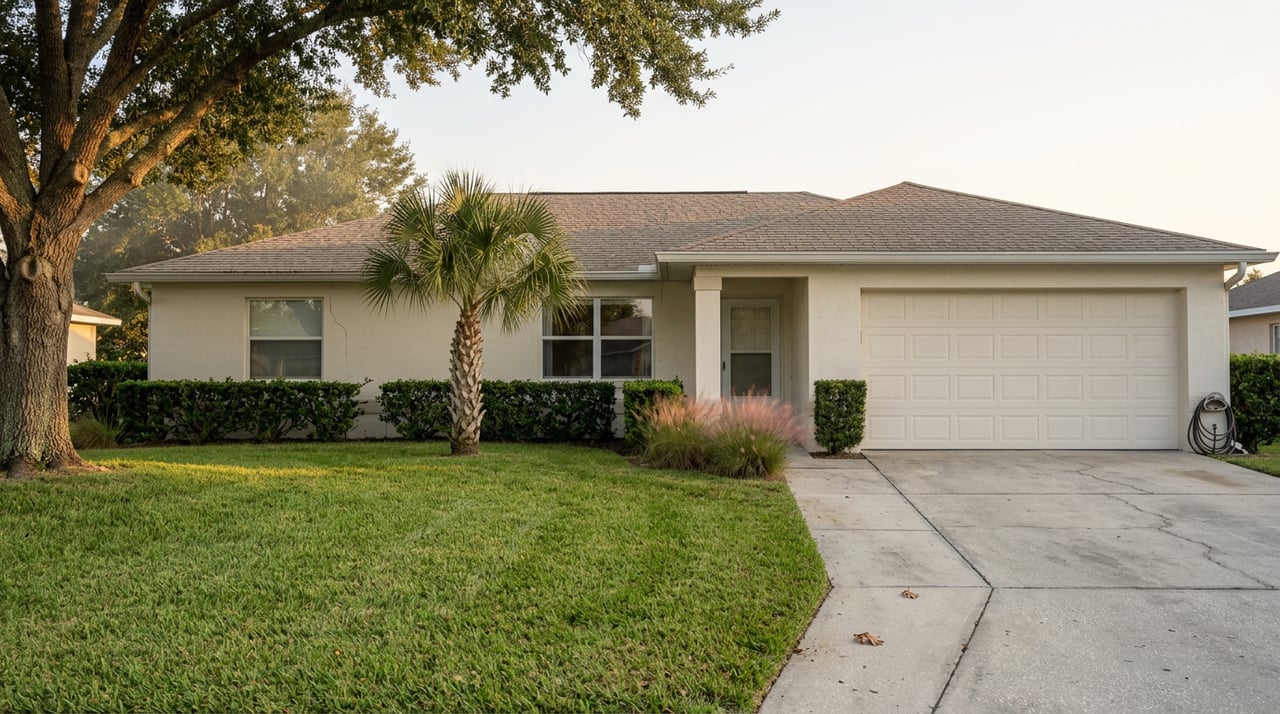
Picture two ranch homes half a mile apart in Spring Hill. Same era, same lot size, both running on private septic systems that pass inspection without a hitch. A buyer touring both would reasonably assume they're interchangeable except for paint color and cabinet finish.
They are not. One of those homes might sit inside a mapped district where Hernando County has already voted to force a sewer connection and attach a repayment assessment to the property. The other might sit just outside that line, eligible for a different kind of help entirely, or bound by no program at all. The difference isn't the house. It's which side of a specific street the parcel falls on.
That distinction rarely shows up in a listing description, and a home inspector has no reason to flag it, because the septic system itself may be working perfectly. The obligation is coming from the county, not the tank.
Weeki Wachee Springs carries a state designation as an Outstanding Florida Spring, one of the waterways the Florida Department of Environmental Protection is required to monitor and restore under the Florida Springs and Aquifer Protection Act signed into law in 2016. That law forced Hernando County to develop a Basin Management Action Plan addressing what's flowing into the spring's water, and septic tanks turned out to be a major part of the answer.
Gordon Onderdonk, Hernando County's director of utilities, put the scale of the issue plainly in a 2023 interview with WUSF:
"Our county, specially in Spring Hill, has over 30,000 of those within that area. And that's within the spring shed and all that basically goes to Weeki Wachee Springs."
That single sentence explains why this program exists at all, and why it isn't a short-term initiative. Thirty thousand septic systems sitting in one springshed is not something a county fixes in a single budget cycle. It's a multi-decade project, and the county has structured it that way: the plan is built out over roughly twenty years, moving district by district rather than all at once.
What makes this confusing for buyers is that the county didn't create one policy. It created three, and which one applies to a given address depends entirely on geography.
| Track | Boundary (as adopted) | What Happens | Cost to Homeowner | Status |
|---|---|---|---|---|
| District A, Phase 1 | South of Cortez Boulevard, west of Sand Hill Scout Reservation, north of Elgin Boulevard, east of Commercial Way | Mandatory sewer hookup, roughly 400 properties | Estimated $3,600 non-ad valorem assessment, payable over 10 years | Funding approved in 2022; county was still posting construction updates as recently as June 2026 |
| District A, Phase 2 | South of SR 50, north of Elgin Boulevard, east of Deltona Boulevard (Northwest Spring Hill) | Mandatory sewer hookup once funded | Assessment amount not yet set; roughly $1.49 million of the $16.5 million project is expected to land as homeowner assessments | Still moving through the grant-approval process |
| Priority Focus Area, outside District A | West of US 41, south of Centralia Road, north of County Line Road, and a strip west of US 19 nearest the springs | No mandatory hookup; homeowners may install a nitrogen-reducing septic upgrade | Up to $7,500 incentive toward the upgrade, paid to the contractor on the homeowner's behalf | Window opened March 11, 2026 for a capped 132-system allocation; the county's own program page now shows that round's funding fully committed |
A home outside all three of these zones stays on ordinary septic rules with no mandate and no incentive attached. That's the fourth, unlisted category, and it's still the largest one in the county.
The practical effect is that "on septic" stops being one fact and becomes three very different futures, depending on a boundary line most buyers never think to ask about.
A septic inspection tells you whether the tank and drain field are functioning today. It has no mechanism for telling you whether the county has already voted to replace that system with a sewer connection, or whether an assessment is scheduled to appear on the tax bill in a future year.
That gap matters most in three situations:
None of this is a defect in the traditional sense. It's a status, and the only way to see it clearly is to check the address against the county's district maps directly, either through Hernando County's Engage Hernando septic-to-sewer project page or by asking the utilities department whether a parcel identification number sits inside an active MSBU.
Because these are structured as Municipal Service Benefit Unit assessments, they're collected the same way as property taxes: billed annually as a non-ad valorem line item until paid off. That means the obligation doesn't disappear at closing. It transfers with the deed.
A buyer who doesn't ask can end up inheriting several years of a ten-year payment schedule they never agreed to when they made their offer. A seller who's already partway through the payments may be able to satisfy the remaining balance at closing, similar to how a paid-off special assessment is often handled in Florida real estate transactions, but that only happens if the assessment is identified and negotiated before the contract is signed, not discovered afterward.
For a buyer comparing two similarly priced Spring Hill homes, this is the number that actually separates them. It won't show up in the price per square foot. It shows up in the county's assessment roll, and it's worth pulling before writing an offer, not after.
If my target home is already connected to sewer, does any of this apply? No. These assessments only apply to properties required to convert. A home already on public sewer isn't part of District A's mandatory hookup or the Priority Focus Area incentive.
What if the home is on septic but outside the springshed entirely? Then neither program applies. Ordinary Florida septic rules and maintenance responsibilities are the only consideration, the same as anywhere else in the county outside the mapped areas.
Is the $7,500 incentive the same as the mandatory hookup assessment? No, and they're mutually exclusive by design. The incentive funds a nitrogen-reducing septic upgrade for homes that are not required to connect to sewer. The assessment funds the actual sewer connection for homes inside District A. A property only qualifies for one or the other, not both. Worth knowing before you count on it: the incentive program's March 2026 round was capped at 132 systems, and the county's program page currently shows that funding already committed, so a future round would depend on new appropriations.
How would I actually check which category a specific address falls into? The county's district boundaries are public. Comparing a parcel's address against the maps published through Engage Hernando's Septic to Sewer project, or calling Hernando County Utilities directly, is the most reliable way to confirm status before making an offer.
None of this makes Spring Hill a harder place to buy or sell. It makes it a place where the address itself carries information that a listing sheet won't volunteer, and that's exactly the kind of detail worth having someone check before you fall for a house. If you're comparing homes in Spring Hill or anywhere else along the Nature Coast, Amy Crowell and the Palm & Pine Collective team can help you find out what a specific parcel actually carries with it. Reach out for a free home valuation and a straight answer about what you're really buying.
Stay up to date on the latest real estate trends.
Grow your career within a collaborative, mentorship-driven environment focused on integrity, education, and sustainable success.